Light and Shades
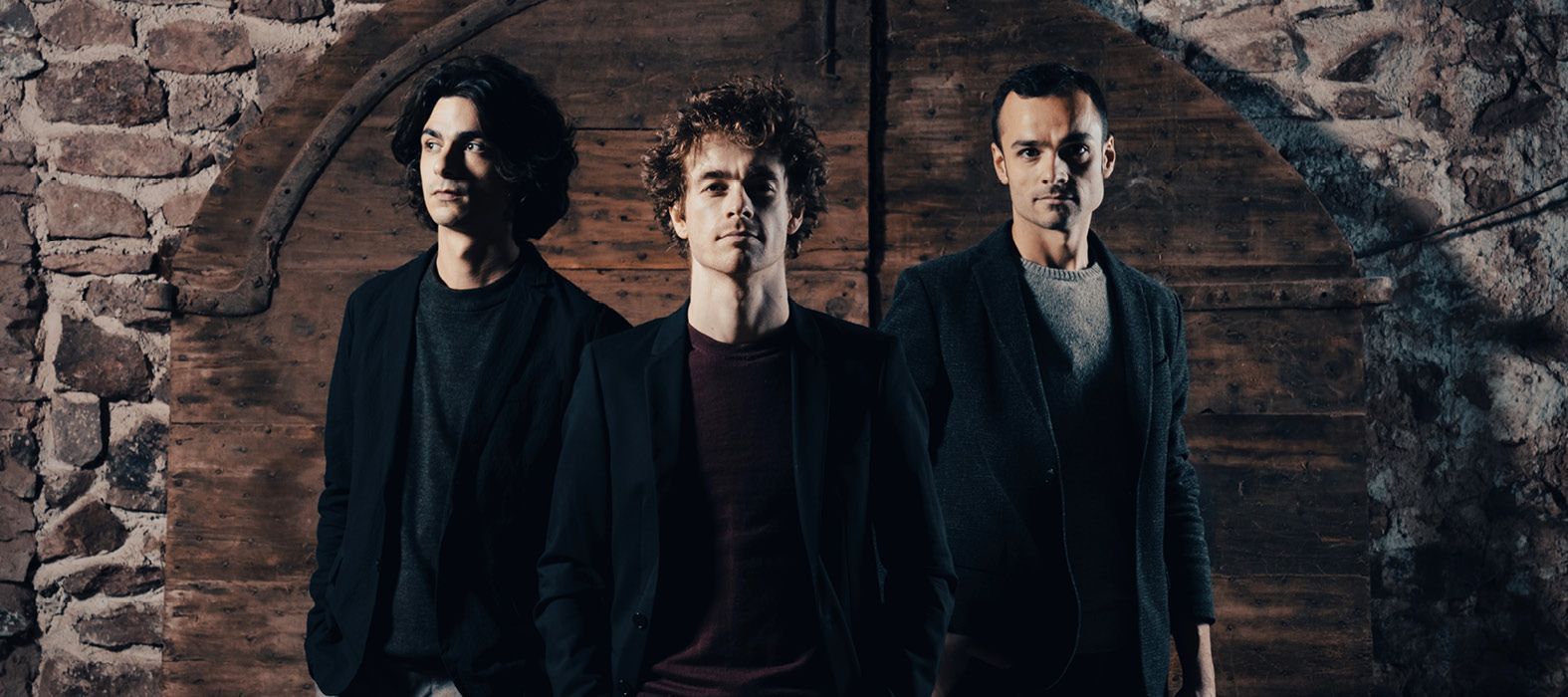
Trio Hélios, one of France's most exciting new-generation piano trios, makes its North American debut with a program spanning music from the First and Second World Wars.
Maurice Ravel’s Piano Trio in A minor was written in 1914 with intense fervour and urgency on his part – the First World War was looming. In describing his feelings while writing the piece, he says: “I have never worked with more insane, more heroic intensity,” and “I am working on the Trio with the sureness and lucidity of a madman.” Ravel’s work paid off: the result was a true masterpiece. The opening Modéré draws on Basque folk dance rhythms, while the scherzo, Pantoum, combines mischievous, romantic, and expressive themes in a shower of sparks. A solemn Passacaille follows, rooted in a dance form from the Spanish Renaissance, before the Finale returns to Basque dance rhythms, bringing the work to a grand, symphonic close.
A contemporary of Ravel, Lili Boulanger’s D’un soir triste and D’un matin de printemps were the two final works of her short life. These complementary pieces show, on one hand, her restrained and poignant side, and on the other, a vibrant boldness and dancing freshness.
Dmitri Shostakovich’s Second Piano Trio emerges from tragedy and loss resulting from the Second World War: mourning his friend Ivan Sollertinsky and other war victims, the work carries both personal grief and the dark shadows of history. The finale notably draws upon a Jewish folk theme, its spectral dance tinged with irony and defiance – music that Shostakovich would echo once more in his Eighth String Quartet, dedicated “to the victims of war and fascism.”
PROGRAM
Maurice Ravel
Piano Trio in A minor
Lili Boulanger
D’un soir triste – D’un matin de printemps
(On a Sad Evening – On a Spring Morning)
– Intermission –
Dmitri Shostakovich
Piano Trio No. 2, Op. 67
Program subject to change